
You swore you'd never do what your parents did. And yet here you are, mid-argument with your partner, saying something in a tone you recognize. Or shutting down completely, going quiet when you most need to speak. Or bracing yourself for the moment when someone you love decides they've had enough.
None of this is a coincidence. It's the quiet architecture of your earliest relationships, still running in the background of your adult ones.
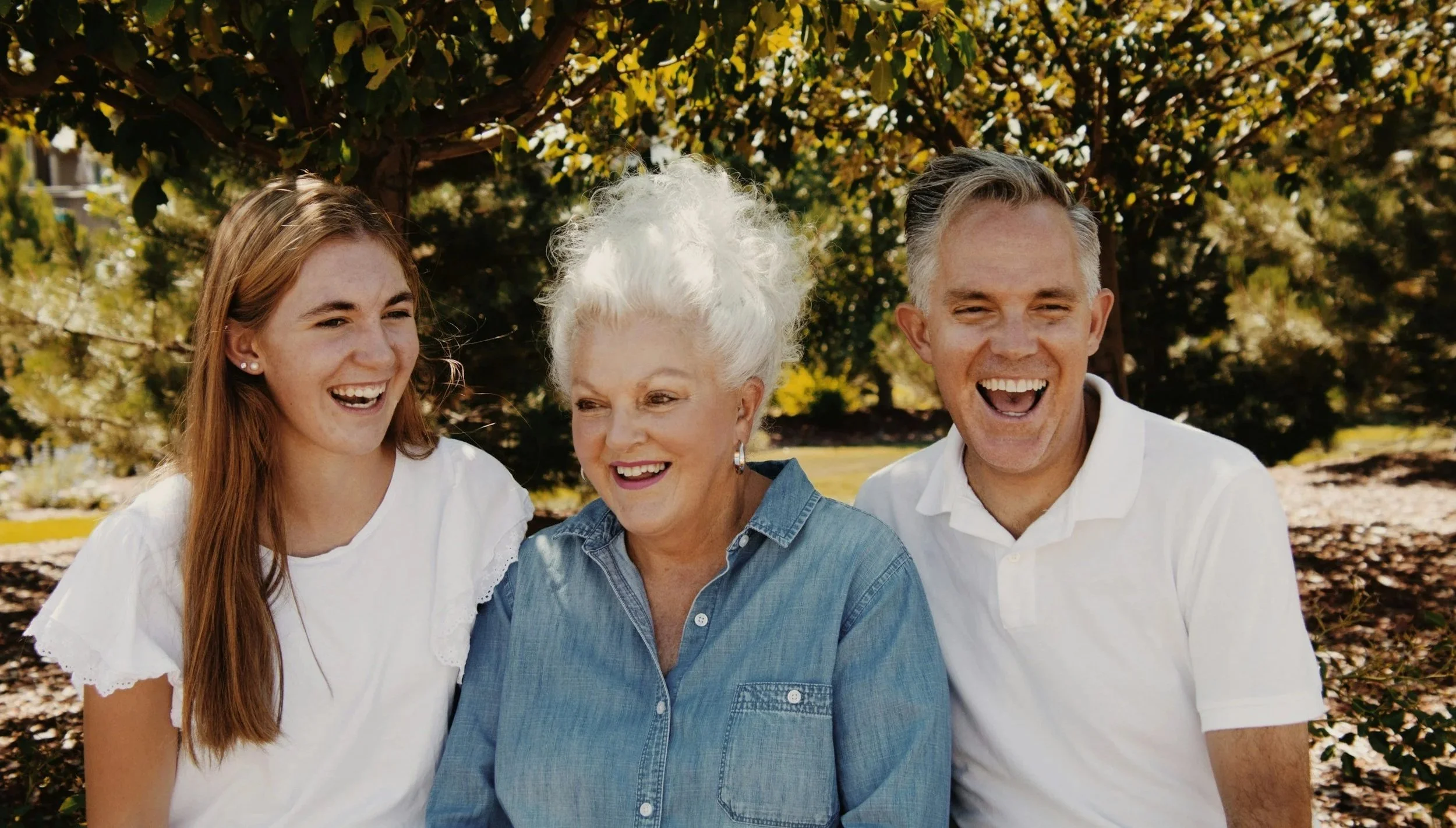
How Do Childhood Experiences Shape Adult Relationships?
The relationships we have as children, with our parents, caregivers, and family, are the first template our nervous system has for what relationships are. Before we have words for it, we're learning: Is it safe to need people? Do they come when I call? Will they leave if I'm too much? Will they stay even when things are hard?
These early experiences shape what psychologists call our attachment style, the largely unconscious set of beliefs and behaviours we carry into close relationships as adults. They shape what we expect from partners, how we respond to conflict, how we handle intimacy and distance, and what we do when we feel threatened or abandoned.
What Are the Main Attachment Styles?
Attachment theory, developed by psychologist John Bowlby and later expanded by researcher Mary Ainsworth, identifies four primary attachment patterns that form in childhood and tend to persist into adulthood.
Secure attachment develops when caregivers are consistently responsive, available, and emotionally attuned. Adults with secure attachment tend to feel comfortable with intimacy and independence. They can ask for what they need, tolerate disagreement without catastrophizing, and trust that the relationship can survive conflict.
Anxious attachment often develops when caregiving was inconsistent, sometimes warm and present, sometimes unavailable or emotionally unpredictable. Adults with anxious attachment tend to feel hypervigilant about the relationship, worried about abandonment, and often need a lot of reassurance to feel secure. They may come across as "too much" to some partners, when in reality they're responding to a nervous system that learned love is not reliable.
Avoidant attachment often develops when emotional needs were routinely minimized, dismissed, or met with discomfort. Adults with avoidant attachment tend to value self-sufficiency, feel uncomfortable with emotional closeness, and pull away when partners get too close. They may genuinely want connection while also having a deep-seated aversion to depending on anyone.
Disorganized attachment (sometimes called fearful-avoidant) tends to develop in the context of trauma or caregivers who were themselves a source of fear. Adults with disorganized attachment often experience a painful push-pull: they want closeness and are terrified of it at the same time.
Most people don't fall cleanly into one category. Attachment styles exist on a spectrum, and many people carry a primary style with elements of another depending on the relationship.
Why Do These Patterns Keep Repeating?
Because they feel familiar. And familiar, even when it's painful, often feels like safety.
If you grew up in a household where love came with conditions, or where conflict meant someone leaving, or where your emotional needs were treated as inconvenient, your nervous system learned to work within those parameters. That becomes your baseline for what relationships feel like.
As an adult, you may find yourself drawn to dynamics that recreate those early conditions, not because you want to suffer, but because your system knows how to navigate them. The chaotic relationship feels exciting in a way the stable one doesn't. The unavailable partner feels more compelling than the one who's simply there. The familiar ache of trying to earn someone's love can feel more recognizable than being loved freely.
This is not a failure of insight. You can know exactly what's happening and still find yourself pulled toward these patterns. That's because attachment is encoded at a felt, bodily level, not just a cognitive one. Understanding it intellectually is a start. Doing the work in relationship therapy is how it actually shifts.
What Specific Patterns Come Up Most in Adult Relationships?
There are several that tend to show up again and again in therapy:
People-pleasing and self-abandonment. When you learned early on that keeping the peace mattered more than your own needs, you may have become very good at reading other people's emotions and adjusting yourself accordingly. As an adult, this can look like chronic difficulty saying no, suppressing your own preferences to avoid conflict, or feeling responsible for everyone else's emotional state.
Difficulty trusting. If the people who were supposed to be reliable weren't, trust doesn't come easily. You may find yourself waiting for the other shoe to drop in relationships, or pushing people away before they have a chance to leave.
Fear of conflict. For many people, conflict wasn't resolved growing up, it escalated, led to punishment, or resulted in withdrawal of love. That history makes conflict feel genuinely dangerous as an adult, even when the stakes are low. The body responds to a disagreement with a partner like it's a threat to survival.
Emotional unavailability. Sometimes the pattern isn't what you do in relationships, it's what you don't do. If expressing emotions was discouraged or felt unsafe growing up, you may have learned to manage everything internally, keeping your inner life private even from people who are close to you. Partners often experience this as distance or disconnection.
Repeating the same dynamic with different people. This is one of the clearest signs that something early is at work. If you notice yourself in the same relationship role with different partners, friends, or colleagues, the common thread is worth exploring.
Can These Patterns Actually Change?
Yes. This is where the research is encouraging.
Attachment styles are not fixed. They are learned patterns, and learned patterns can be unlearned, or more accurately, new patterns can be built alongside them. What neuroscience shows us is that the brain remains capable of forming new neural pathways throughout adulthood. A term researchers use is "earned security": the process by which someone who did not have a secure attachment in childhood develops one through meaningful relationships, including the therapeutic relationship itself.
Therapy is one of the most reliable ways this happens. Not because a therapist tells you what to do differently, but because the therapeutic relationship itself becomes a place to practise something new, to experience being heard, to have needs met without consequence, to learn what it feels like to trust someone who is consistently there. That experience, repeated over time, begins to update the nervous system's model of what relationships are.
Relationship therapy in Calgary, whether individual or couples, offers exactly this kind of work. Individual therapy helps you understand your own patterns and where they came from. Couples therapy brings both people's attachment histories into the room, helping partners understand not just what they're fighting about but why the same fights keep happening, and what they're each reaching for underneath the conflict.
How Do I Know If My Relationship Patterns Are Worth Exploring in Therapy?
You don’t have to be in a crisis, or in a relationship that’s falling apart, to benefit from this work. Maybe you notice the same dynamics repeating across different relationships, find intimacy uncomfortable even when you want it, or feel anxious about whether the people you love will stay. You might struggle to ask for what you need, set boundaries with people you care about, or navigate conflict without feeling overwhelmed. Perhaps you feel disconnected from your own emotions in relationships or find yourself drawn to people who aren’t fully available.
If any of that resonates, that’s a good enough reason to start the conversation.
At Exhale Psychology Group, Jessica Foglia works with individuals and couples navigating the relationship patterns that keep showing up, the ones rooted in early attachment experiences, family dynamics, and the stories we've carried about what love is supposed to look like. With warmth, curiosity, and a deep knowledge of attachment-based approaches, Jessica helps clients understand where their patterns come from and how to build something different.
Ready to explore this? Book a complimentary connection call or book a session directly.